
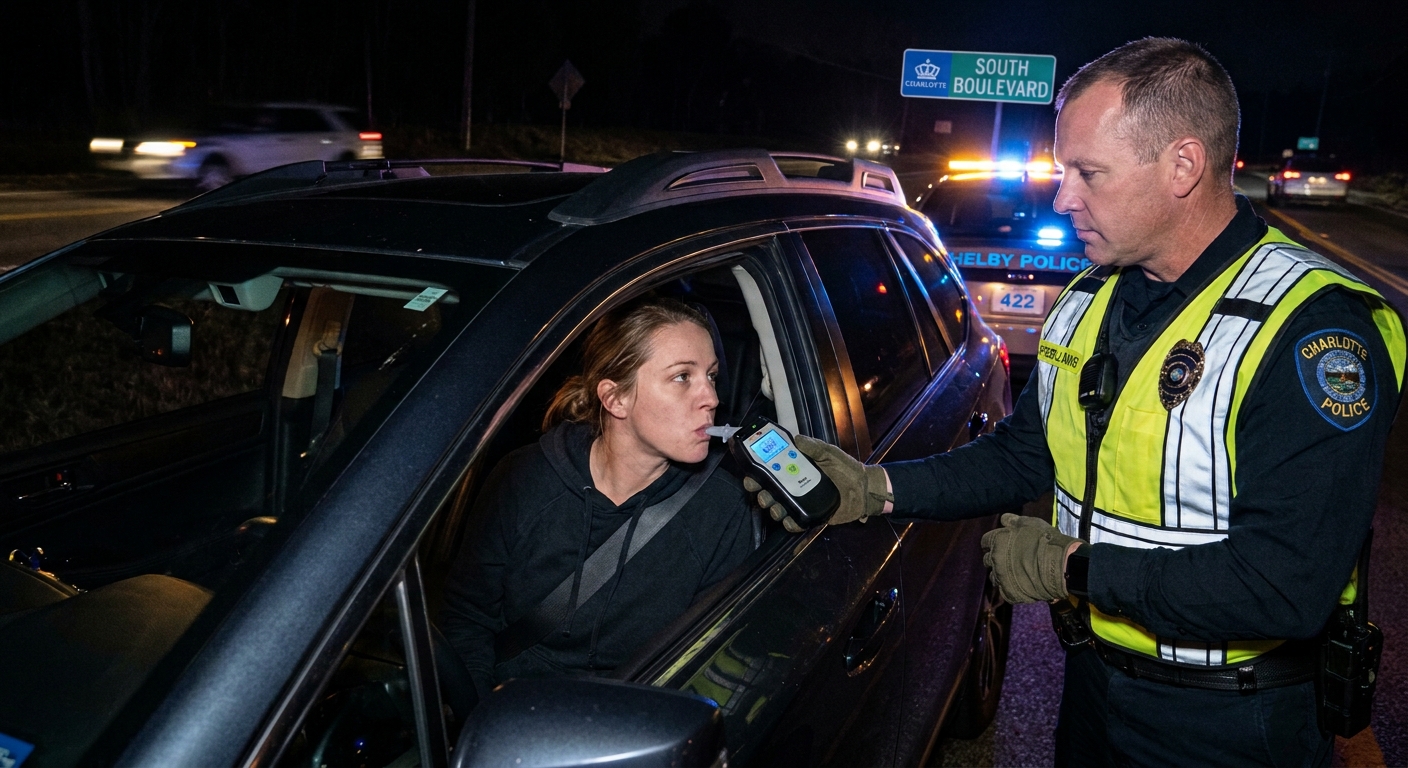
Understanding how breath tests work in North Carolina can help you feel more prepared and less anxious if you ever face a DWI stop.
What Implied Consent Means
North Carolina has an implied consent law. If you drive on public roads, you are agreeing ahead of time to take certain chemical tests if you are lawfully arrested for DWI.
But not every test is done perfectly. Small details can make a big difference in these cases.
What Happens If You Refuse a Breathalyzer
If you refuse a breath test, your license can be suspended through a civil process. This suspension can actually last longer than if you took the test and did not pass. Your refusal can also be mentioned in your criminal case.
That’s why it’s important to understand the pros and cons before making a decision.
Roadside Breathalyzer Tests Are Different
The handheld breath test police use at the roadside is different from the one at the station. Field sobriety tests are also separate, and each type of test follows its own set of rules.
What Can Be Reviewed Later
If you took a breath test, a defense attorney can look at several factors to make sure the process was handled correctly:
-
Whether the stop was lawful
-
Whether the arrest had enough support
-
How the machine was kept and checked
-
Whether the operator followed the proper steps
-
Whether you were observed for the required time
Even small mistakes during DWI testing can affect the outcome of your case.
Your License and Your Case Are Separate
Your license status and your criminal case are two separate matters. Both can move quickly, and each has important deadlines you need to remember.
If you have been charged with a DWI, contact our criminal defense law firm for a free initial consultation. A Charlotte criminal defense attorney can explain how breath test results could impact your case and help you understand your options.
Serving clients throughout Charlotte and Mecklenburg County.
N.C. Breathalyzer FAQs
Is the roadside breath test the same as the test at the station? No. They are different tests with different rules. Each can be reviewed on its own.
Can a refusal be used against me? It can come up in court and affect your license. The details depend on your case.
Can breath test results be challenged? In some cases, yes. Equipment, training, and procedure can all be looked at.
